Chișinău gained a global notoriety after waves of anti-Jewish violence had swept through the city on April 6-7, 1903, a holiday weekend when celebrations of Christian Easter and Jewish Passover overlapped.
A long run of targetted bad press preceded those tragic events. Vicious antisemitic articles appeared in Bessarabets, a local newspaper published by Pavel Krushevan, a notable ultra-nationalist who purposefully fanned the flames of hatred. Baron Levendal, the local police chief, authored some of the most poisonous texts. In this tense setting, any incident could have produced serious consequences. So, when the lifeless body of a Christian child was found nearby, things spiraled beyond control. Fingers pointed toward the Jews, rumors of a ritual murder flying. Bessarabets circulated these false accusations, inciting aggression against the Jews. Later investigations revealed that the boy’s non-Jewish relative committed the crime.
By official count, 49 people died and over 500 were injured in the pogroms in 1903, some left with severe traumas. Around 700 houses were vandalized. Circa 600 small businesses and shops were looted. Neither the local police nor the military stationed in the city intervened to stop the violence.
The impact of those April events sparked an unprecedented global reaction. When the public demanded justice, some of the perpetrators faced the court but received relatively light sentences. Pre-trial inquiry revealed that dozens participated in the crimes of robbery, murder and rape but only a select few were penalized. No compensation for property damages was issued. The victims covered all repair costs. It seemed authorities of the Russian Empire, whose subjects at the turn of the 20th century included over a half of the world’s Jews, would not act to either protect them or defend Jewish rights and freedoms.
Celebrity writer Leo Tolstoy accused the government officials of complicity during the Chișinău pogrom. A leading Hebrew poet Haim Bialik brought those terrible days into focus in his poem Be-Ir ha-Haregah (The City of Slaughter). Russian human rights activist and author Vladimir Korolenko published a special essay House No. 13 after visiting the city soon after the pogrom.
The repeat came on October 19–20, 1905. The second pogrom began as an anti-state policy protest but soon descended into an anti-Jewish attack, with 19 casualties and 56 Chișinău Jews wounded. In comparison to 1903, the Jews responded in a different fashion. Far from passive, they organized self-defense groups to fight back against the aggressors.
Both pogroms had profoundly influenced the mood and self-consciousness of ChișinăuJews. Emigration rates exploded while the appeal of Zionism grew in leaps and bounds. Jews left to settle in Palestine, the Americas, Africa, or Australia. Between 1902 and 1905, the city’s Jewish population dropped from 60,000 to 53,243. Most left to never return. After the second wave of anti-Jewish violence in 1905, outbound migrations had only increased.
Nowadays, the story of pogroms in 1903 and 1905 in Chișinău continues to shape the Jewish collective memory. For many descendants, their Jewish ancestors left the Old World out of fear, to seek refuge elsewhere. The spectre of further pogroms haunted the city.
Those tragic years were also pivotal moments in the broader history of Bessarabia, the Russian Empire, and the entire world. The word “pogrom” entered the dictionary then to denote an organized massacre of helpless people. Various texts about the events in Chișinău emerged immediately, starting from the very month of April 1903. Ranging in formats from newspaper articles, essays, poems, or novels to scholarly research outputs, publications have never ceased. Post-pogrom, donations started to pour in from all corners of the world, to a total of one million rubles, a shocking sum for those times.
Below is our attempt to reconstruct how the first pogrom unfolded. We guide you to specific locations in the city, both historical and those that still exist, and introduce some of the key players in the drama unleashed in April 1903.
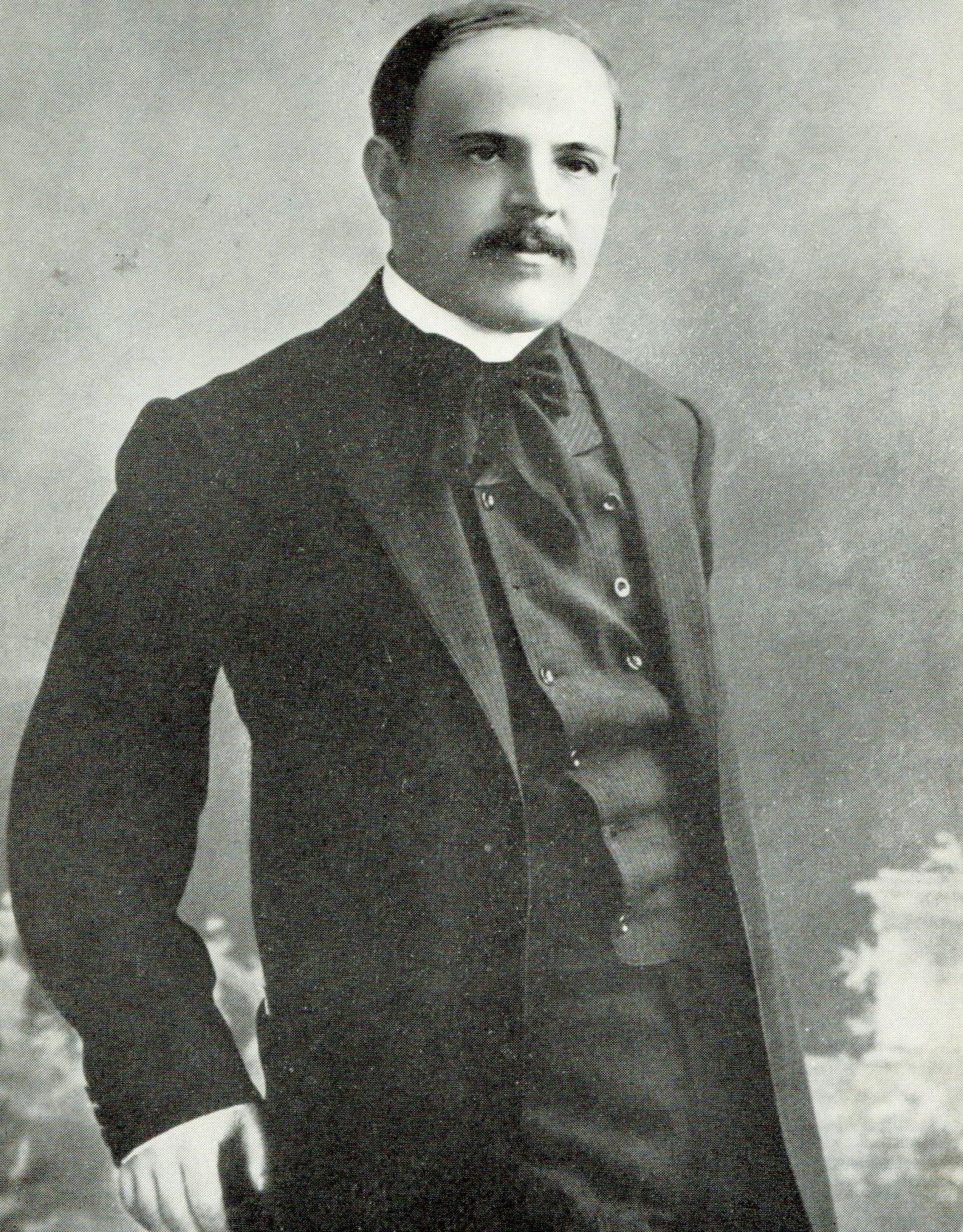
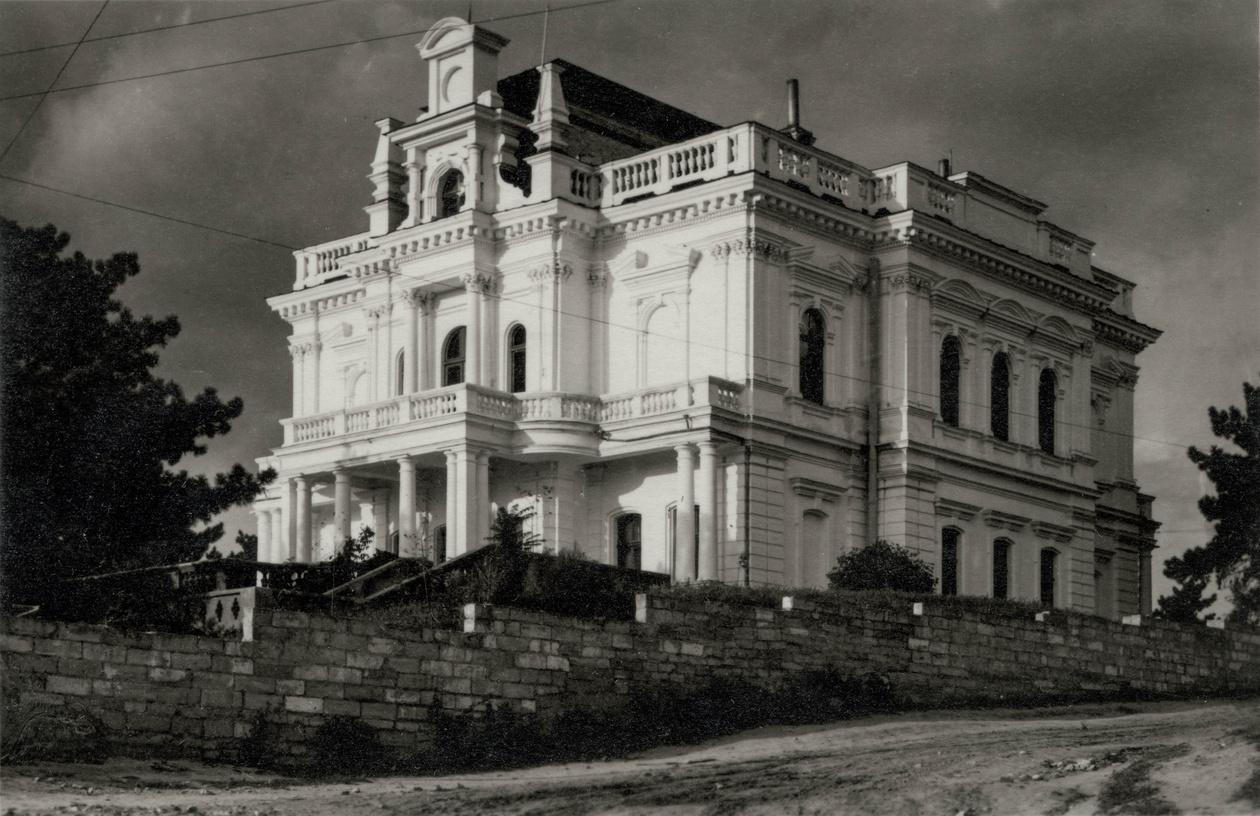
Pronin […] represented the well-known type of a Great Russian contractor with a tight-fisted hand, who had arisen from a common burgher to a merchant; who had enriched himself with all sorts of government contracts, and had oppressed his workmen, with whom he was constantly engaged in lawsuits about money matters. A shrewd emigrant from Orel, Pronin quickly made a fortune at Chișinău, thanks to the ignorance of the Moldavians and the easy-going ways of the Bessarabians. He acquired land, a house, and considerable capital. The Jews, however, limited the growth of his wealth by competing in the city contracts, and reducing prices to such an extent that there was no more room for the Great Russian to expand.
I was interested in another aspect of this manysided gentleman. Willy-nilly, I was forced to look into the dark comers of Pronin's character, where lurked the instincts of a demagogue of the lowest stamp. Pronin often liked to play the role of a protector and leader of the poor working-man, and did not hesitate to spend money to gain influence in labor circles. Posing in the double гolе of a protector of the [Christian] people from the Jews and of a true Russian patriot, the shield of autocracy, Pronin had some connections in St. Petersburg and with the local gendarmerie.
It was interesting to follow the trial at the beginning, when the chief witnesses were examined. Especially interesting was the examination of Pronin. The attorneys for the plaintiffs grilled him by turns, exerting all their efforts to turn him from a witness into a defendant. Pronin was convicted of composing inflammatory proclamations and of spreading false rumors dangerous to the Jews.
It was ascertained that he was the author of the articles in Znamya, in which he tried to prove that the Jews themselves instituted the massacre. The lawyers tried to learn who corrected his articles. They made him admit his journey to John of Kronstadt, to receive from him the well-known ‘Second Epistle’ against the Jews. They read Pronin’s verses, compelled him to give answers betraying his ignorance, and gave him a respite only after his face gave certain evidence of an impending apoplexy.
In the last few years, city residents regularly encountered subversive messages of clearly Jewish origin, such as manifestos addressed ‘to the intelligentsia, the people, or the proletariat.’ Their intention was to fuel strikes among the workers. They encouraged civil disobedience. They promised strike pay. Under the influence of Jewish agitators, the working classes turned hostile.
Yet the commoners had also held high and unwavering esteem for their beloved tsar. A small rumor just before the Easter holiday was enough to spark a huge disaster. Jews, it was whispered, were plotting evil plans against the tsar and the monarch ordered to punish them. With malice suddenly free of constraint, folks sought revenge on the Jews.
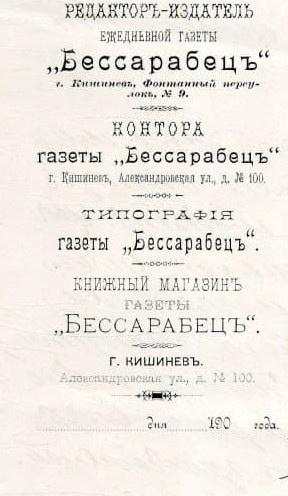
A title page listing the addresses of Bessarabets, its main offices, editing house and book store, today located in the perimeter of the following streets: Stefan cel Mare, Mihai Eminescu, Veronica Micle and Vasile Alecsandri.
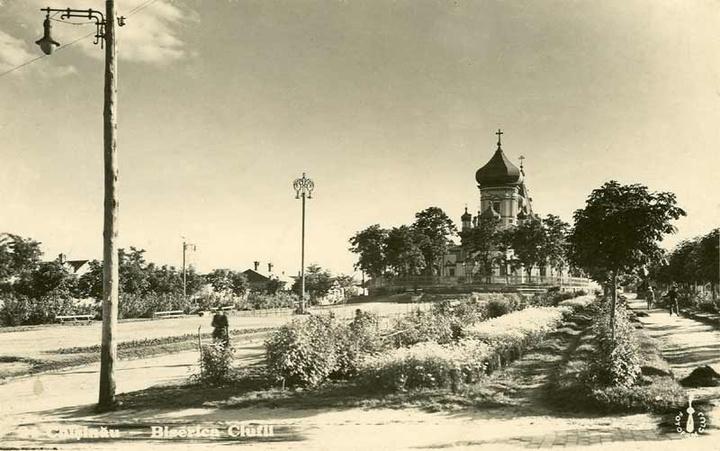
The anti-Jewish riots in Chișinău started on the first day of Easter, 6 April 1903, and continued on the 7th and 8th. […]
The Ciuflea Square [...] filled up with various sorts of people on high holidays, mostly day laborers and lower classes by origin. [...] I was there around 4 o’clock in the afternoon on that first day of Easter. When I heard that someone in the crowd had thrown stones at the windows, I suggested that everyone should just go home. Some people grumbled, but most began to disperse in the direction of Aleksandrovskaia and Svechnaia streets. That was where the atrocities continued.
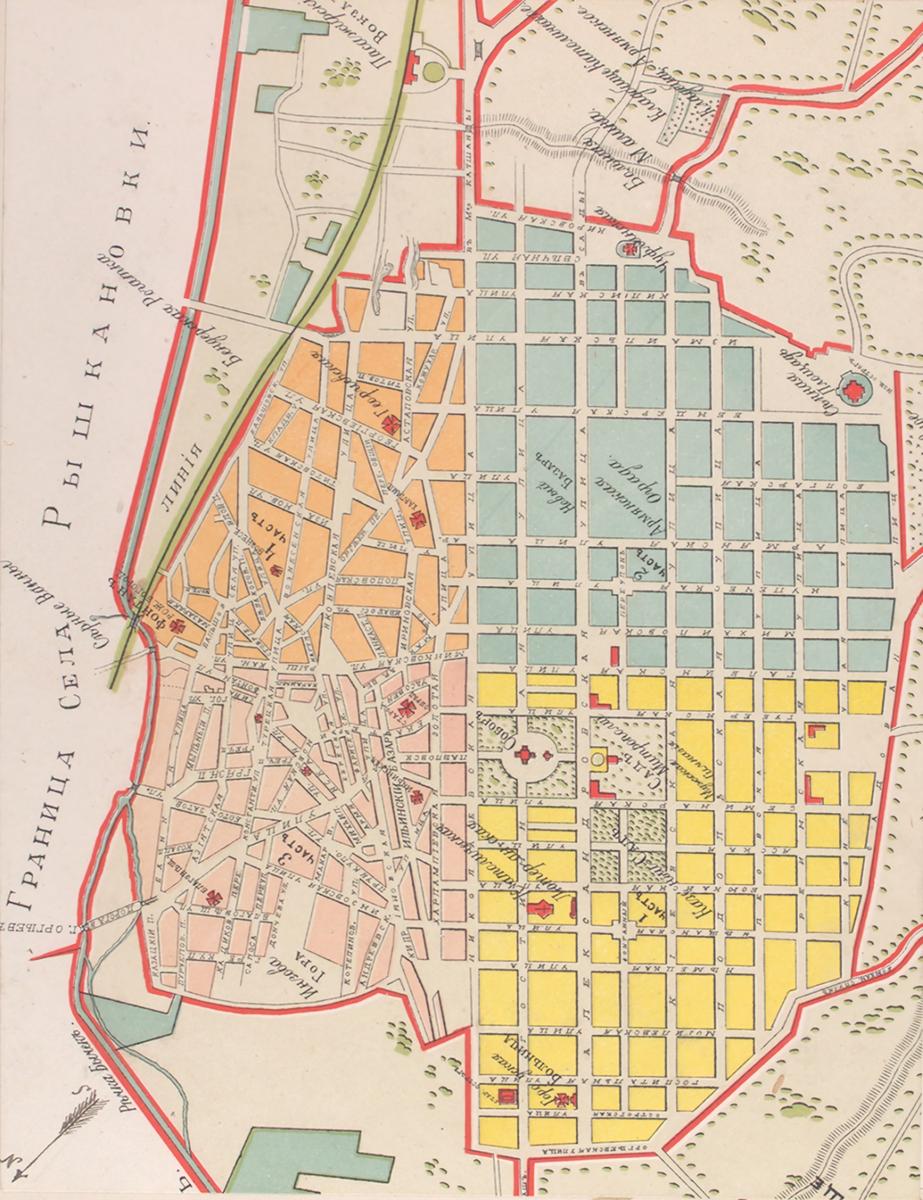
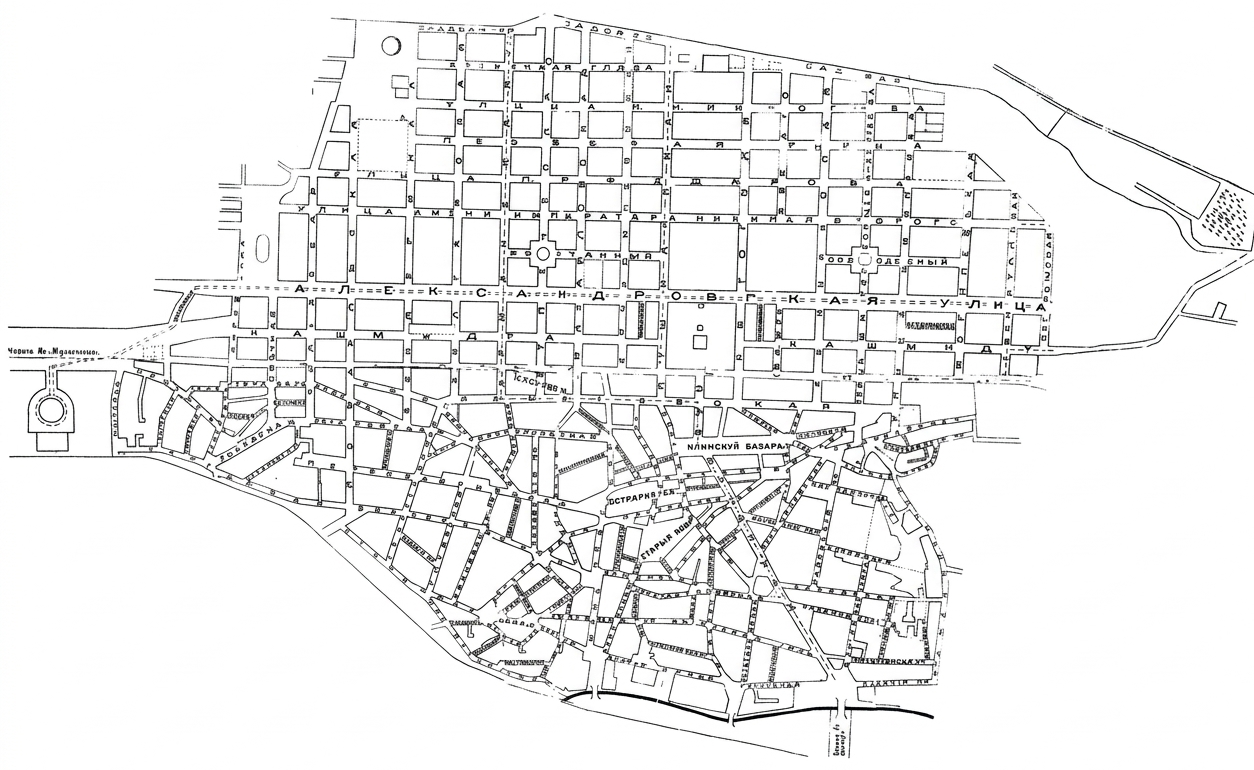
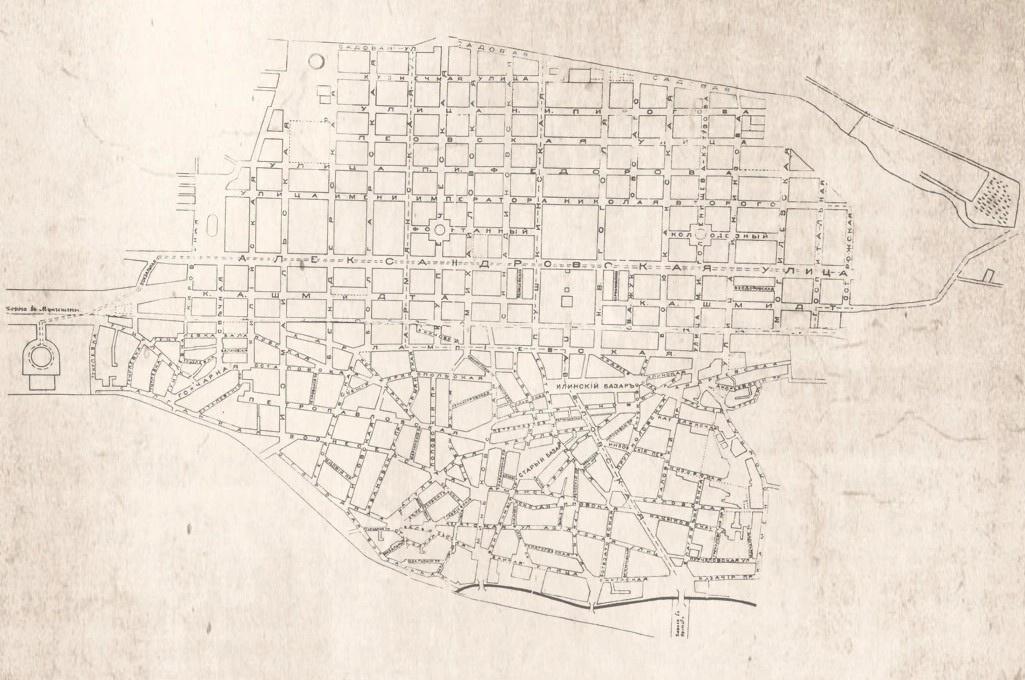
The neighborhoods around the Ciuflea Square and New Market, about three blocks apart, had suffered the most. That’s where the pogrom began. No street or corner there was left intact. Every house was damaged. Nikolaevskaia and Kirovskaia, as well as the adjacent Armeanskaia, Svechnaia, and Gostinnaia streets, were all subjected to notable ruin. They formed the boundaries of the Second precinct on the eastern and southern sides.
The inventory of damages on Kirovskaia street included 13 dwellings totally wrecked; windows smashed in 8 more houses. Looters killed two Jewish men, Yudko Krupnik and his son Meer Krupnik, in Soibelman’s residence (No. 52 Kirovskaia st).
17 houses destroyed on Svechnaia street; windows broken in 2 other houses.
34 houses in a state of ruin on Kiliiskaia street; windows shattered in 8 houses. […] Shmul Urman was killed in the home of Abram Shvartsman (No. 56 Kiliiskaia st).
30 buildings were damaged on Gostinnaia Street; windows smashed in 59 houses. […] Ios Grinberg, a Jewish coachman by trade, and Grigory Ostapov, a young boy, were murdered there. Perpetrators also killed Aron Brakhman and his son-in-law Itsko Rosenfeld and severely wounded Risia-Rivka Brakhman, Aron’s wife, in the courtyard of Litvak’s house (No. 66 Gostinnaia st). The bodies of Benzion Galanter, David Drakhman, and Beniamin Baranovich were found at No. 33 Gostinnaia st.
Everywhere on these streets one could see scattered shards of furniture, broken mirrors, mutilated pots and lamps, pieces of clothing and linen, torn apart mattresses and featherbeds. Down feathers covered the ground like a thick layer of snow and were flying in the air to settle on tree branches.
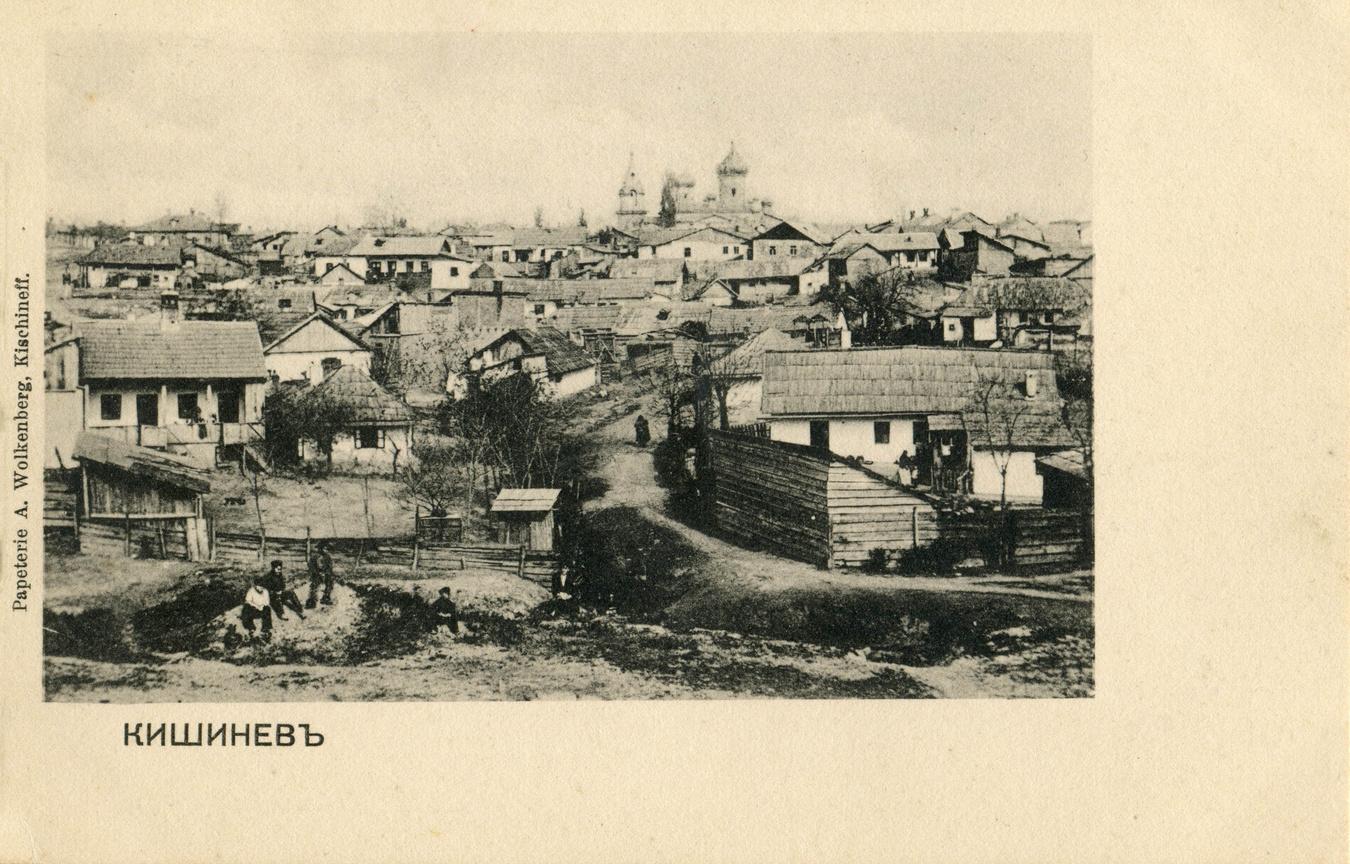
The city of Chisinau is situated on elevated terrain, gradually descending towards the bank of the drying Byk River. Along the bank of said river runs the track of the Southwestern Railway. The city grounds are divided into five police precincts, four of which are within the old city limits, while the fifth includes the suburbs. A few sections near the station in the fourth precinct include the so-called Gutsuliovka, Tabacaria and Negresti. Plus, there is the Caucaz neighborhood in the second precinct; and the Sculeni boundary dividing the first and third precincts.
[…] The second precinct includes the Caucaz neighborhood, the Ciuflea Square and, about three blocks away, the New Market. That was where the first street-level trouble started and where we recorded the most damage. No house, street or alley had been left intact there.
[…] Everywhere on these streets one could see scattered shards of furniture, broken mirrors, mutilated pots and lamps, pieces of clothing and linen, torn apart mattresses and featherbeds. Down feathers covered the ground like a thick layer of snow and were flying in the air to settle on tree branches.
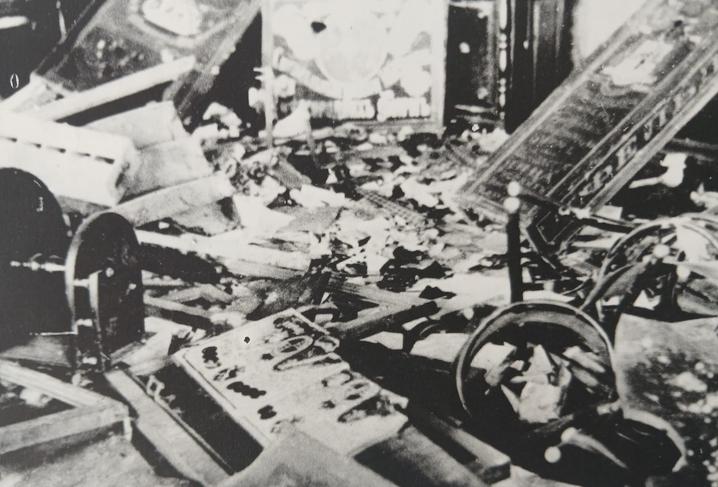
Armeanskaia was where the pogrom began on April 7th around the noon. It was a street densely packed with Jewish-owned properties and had extensive damages. The pogrom affected 15 houses, all destroyed and looted. Windows were smashed in 35 buildings. The Tolmazskis, Alter Neerman, Feigel’s bakery, and Kobrin’s tailoring business had suffered the most.
Smashed and looted were the small grocery shops, Fuchs’ pharmacy at the corner of Podolskaia street, and Feldstein’s wine shop and cellar. The block around the latter establishment was covered with broken champagne and liquor bottles, glass shards all around. Windows and doors were broken into pieces and torn out.
Police Officer Solovkin assigned to the Second precinct observed but did not intervene during several cases of Jewish property destruction. Once the perpetrators finished wrecking Feldstein’s shop, located at the corner of Armianskaia and Podolskaia streets, Solovkin directed the crowd to their next target, saying: ‘Gentlemen, do continue on the opposite side.’ Then, they ruined the wine store located right next to the Second precinct police station.
I saw young maidens (apparently domestic servants), lads, and boys passing by, carrying bottles of spirits and wine. Someone shouted: ‘Stock clearance at Feldstein’s!’ Others unsealed the bottles and drank their contents right there on the street.
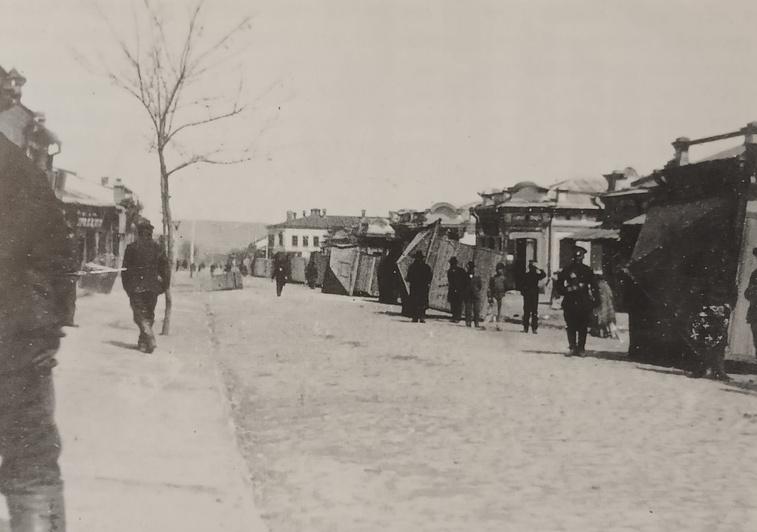
Once our fire fighting brigade reached the New Market location, I saw that all the wooden shopping stalls had been overturned. I immediately approached the Police Chief and the military commander. Right there, on the market square, perpetrators split into small groups to force open the doors and loot the commercial premises in the utterly unceremonious manner. Most of them were adolescents, women, with a few adults physically assaulting the Jews. I witnessed an elderly Jewish male with a bushy red beard running toward me, screaming at the top of his lungs. He was obviously one of the merchants. His entire face was smeared with blood. An aging Russian man chased after him, blood soaking his shirt and hands, a large brass cross adorning his chest. When stopped, the attacker crudely declared that an order had been issued to beat the Jews up. ‘I am a Russian,’ he said, ‘and I want to the Jews to submit to us.’ In the pandemonium, the authorities failed to detain him. The man had disappeared.
Chaos reigned all around: whistling, shouting, the clatter of windows being smashed, folks running around with looted property, the weeping of Jews trying to escape, a disoriented police force, and soldiers calmly standing by. As an outsider arriving onto the scene, I felt strange and bewildered. It seemed as though the police and the troops had been called not to restore order but rather to protect the raging mob against the Jews, as if to give the masses the opportunity to carry out the pogrom as properly and thoroughly as possible.
I should share that back then things unfolded in the following way: a pack of assailants approached stalls or shops, destroyed them, broke or threw the goods and merchandise out into the street, while their accomplices who did not participate in the violence directly picked up everything hurled outside. The law was repeatedly notified. Yet, upon arrival, they requested assistance from the military. Those showed up as well but too late as the businesses had already been irreparably damaged and the property looted. When the police made an appearance, the crowd would scatter but then come together near another building or shop to repeat the cycle of destruction. I’ve witnessed it everywhere...
[...] Within the city limits proper, this mess continued until the evening of April 7th. In the suburbs, the pogrom extended to April 8th along Hancesti, Sculeni, and Bacioi roads for a while. I do not know the exact details about these later developments as I was busy guarding the epicenter and organizing flying fire brigades in Chișinău.
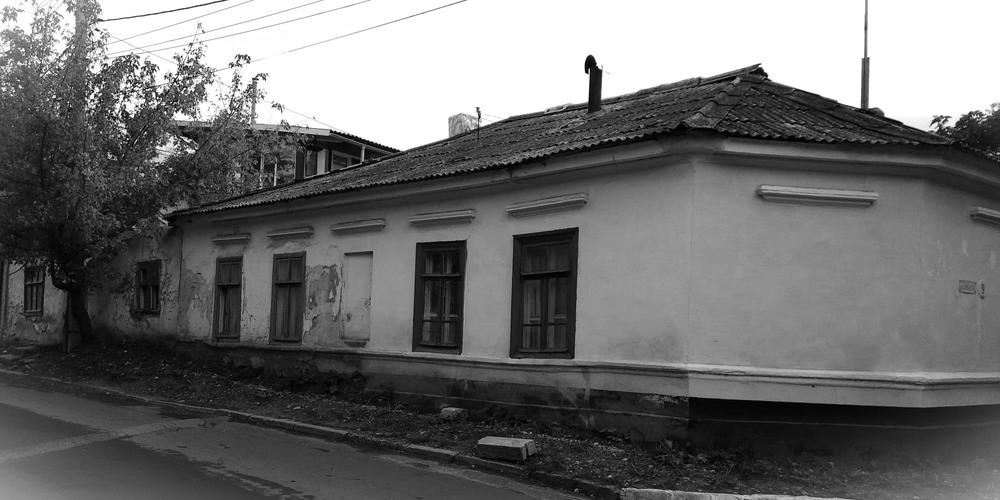
House number 13 is located in the fourth precinct of Chișinău, in a small alley named Aziatskaia, at the intersection with Stavriiskaia. Those streets are so narrow, crooked, and confusing that even the native-born did not know them well. Thus, our Jewish coachman had no clue how to find our destination. (Coaching is a common occupation for the city Jews and many of them were wounded or killed in April.) Yet my companion had had more time to navigate the local landmarks associated with the pogrom and explained: ‘Take us to number 13 where the murders happened.’
[…] House number 13 contained seven small, crowded apartments leased to Jewish families, 45 residents in total, including children.
It was a one-storey building, its roof covered with terracotta tiles in a fashion typical for Chișinău. It stood at the street corner, next to a small square, as if jutting out into it like a blunt cape. A peppering of retched little houses surrounded it, with similar tiled roofs but much smaller in size and even less conspicuous. But while these smaller buildings appeared inhabited, Number 13 looked like an abandoned corpse. Its empty windows gaped at the street, frames warped and broken. The doors were boarded up hazardously, various debris scattered around...
Andrei Gheshev pursued the Jewish glasscutter Motl Grinshpun and hit him several times on the head with an axe, to the latter’s death. Ivan Perzhu from the same crowd came closer to the body laying on the ground and struck Grinshpun on the head with a stone several times. Feodosii Zubinski, Egor Likhachev and Mikhail Lukashevich committed another murder nearby. Haim Nissenzon who rented rooms in Makhlin’s house was running down Aziatskaia street when the three men caught and hit him several times with clubs and other heavy weapons. Nissenzon fell down and was found the next morning in that very place without any sign of life. When the destruction of Jewish apartments in Makhlin’s house was wrapping up, the above mentioned Gheshev, Zubinski, Likhachev and Lukashevich together with accomplices Grigori Daskalov and Piotr Draganov rushed to the attic where a group of Jews had been hiding and assaulted them. Among their victims were Ovshi and Haika Berlatski, Moshko Makhlin, Itsko and Avrum Gerevits. Two Jewish males, Moshko Makhlin and Ovshi Berlatski, tried to escape through a hole in the terracotta tiled roof yet Gheshev, Zubinski, Likhachev and Lukashevich jumped outside, pulled Makhlin and Berlatski down from the roof, and killed them right there on the street.
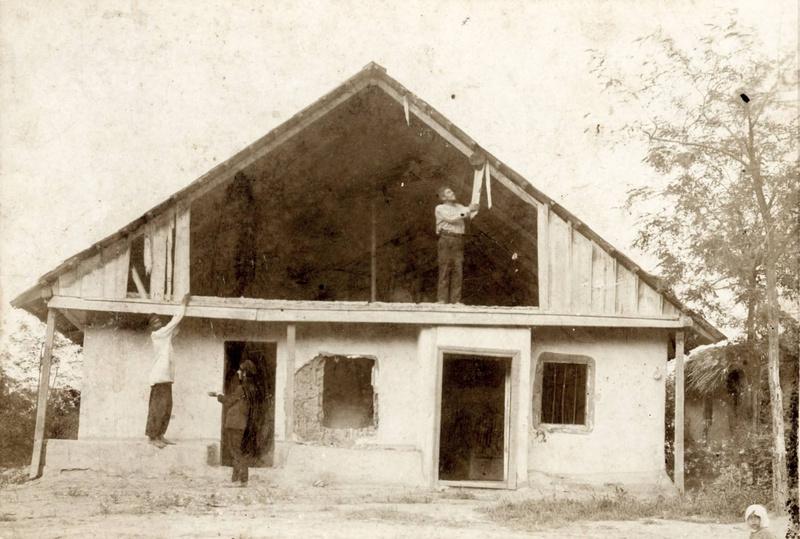
[…] Around 10 o’clock in the evening, the crowd of offenders spread through the Muncesti and Bacioi roads and broke windows in several Jewish homes. Yet by 11 o’clock everything had grown quiet. The next day, on April 7th, the violence flared up again […] taking on a particularly fierce character. Police officer Ossovski reported that the Jews had been gathering since early hours and eventually started attacking Christians, beating aggressors and even firing shots in self-defense. Around 11 o’clock in the morning, destruction resumed on Muncesti and Bacioi roads, affecting multiple Jewish residential and commercial properties. The perpetrators were of mixed backgrounds. Some arrived from outside. Others lived in the city, the Jews’ Moldovan-ethnic neighbors or the workers from local factories, mills, and slaughterhouses.
On April 7, the violence flared up again […] taking on a particularly fierce character. […] Around 11 o’clock in the morning, destruction resumed on Muncesti and Bacioi roads. [….] The perpetrators damaged Jewish stores and apartments, threw furniture, merchandise and other items out onto the street, for immediate plunder and loss. Some Jews were physically assaulted.
[…] Pre-trial investigation determined that 44 houses were damaged on Muncesti road and 27 on Bacioi road. All Jewish-owned shops and houses were looted, with windows and doors remaining broken, dishes and household utensils smashed to pieces, furniture turned to splinters, and barrels emptied in the wine cellars.
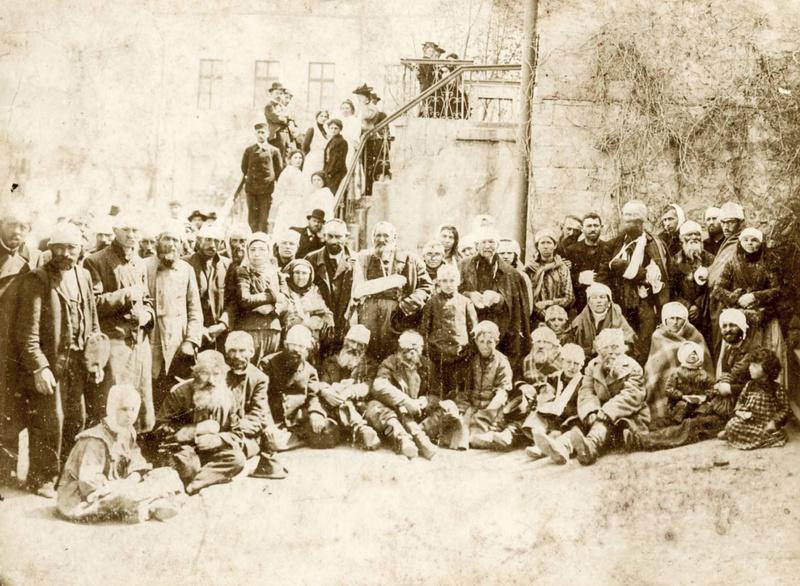
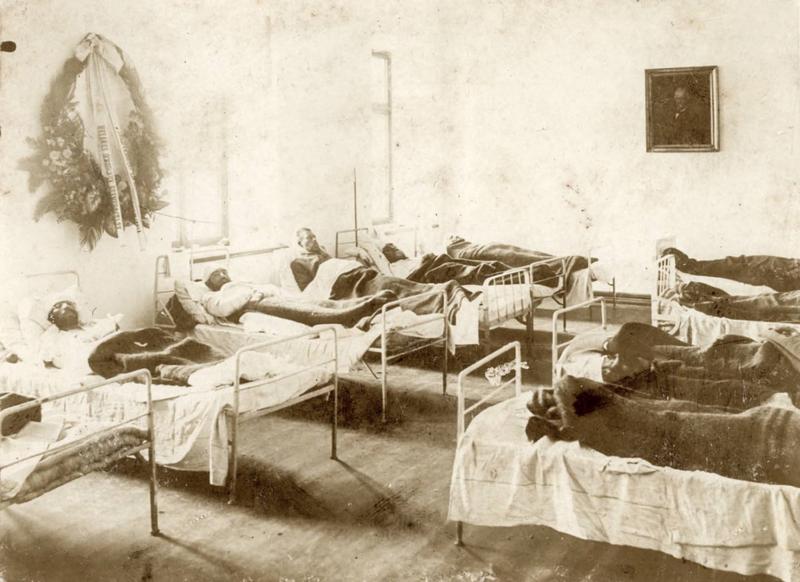
I found a great number of the injured in the waiting room. Those not wounded packed into the small hospital building courtyard, mostly women and children hiding from violence. Moans, weeping, and screams had filled the air. […] After receiving the necessary help, those with less severe injuries never dared to leave. They remained within the hospital grounds and spent the night in the empty summer barracks. My staff and I worked in the operating room, treating the most critical traumas.
Bodies were hurt but most victims had also suffered from deep psychological pain. People were nervous, agitated. Some were delirious or even had hallucinations. […] Many had hysterical fits. Yet the incoming flow of damaged or dead bodies seemed to have no end. A cab driver I knew and often traveled with had brought a seriously injured man to the hospital and then left. Thirty minutes later, his corpse arrived back to us, transported on his own carriage.
The volume of work at the hospital was colossal on April 7 and 8 […]
The building’s capacity was 130 beds yet on those days we provided inpatient care for over 80 severely injured victims and ambulatory treatment for over 300 patients.
I assessed what was going on in the city by counting the number of victims and corpses arriving to the hospital and, most importantly, noting the time when damage occured. Thus, I detected that after 2 am on Tuesday the madness seemed to cease. Those brought in on that Tuesday, dead or alive, resided on the outskirts […] They had been attacked the day before, on Monday, too far to have been brought to a medical facility in time to receive proper care. […]
When totaled, the number of victims brought to hospital reached 500. […] Almost without exception, their injuries were caused by heavy, blunt weapons such as heavy clubs, stones, hammers and such. No gunshot wounds were recorded. Some bodies had evidence of trauma caused by sharp weapons (axes). The most common injuries were to the head, bone fractures in limbs, ribs, jaws, or severe wounds to the torso. One visually impaired male had his healthy eye knocked out.
Most victims’ physical condition was compounded by a severe shock to the nervous system. In medicine, we call it a psychological trauma. Even those with milder injuries, fully conscious and without hallucinations, screamed during the night or tried to escape the hospital’s enclosed spaces.
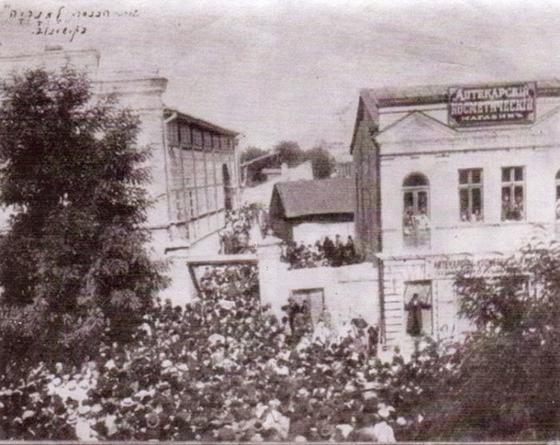
On 24 July [1903], we buried parts of the Torah scrolls that were desecrated and destroyed during the [April] pogrom. From noon the day before, Jewish mourners headed to the synagogue on Pavlovskaia street to pay their respects to these defiled religious relics. The crowds thinned out only closer to midnight.
A large police squad, both mounted and foot officers, arrived to block off the chunk of Pavlovskaia Street around the synagogue at 5 am on 24 July. All traffic on that block halted.
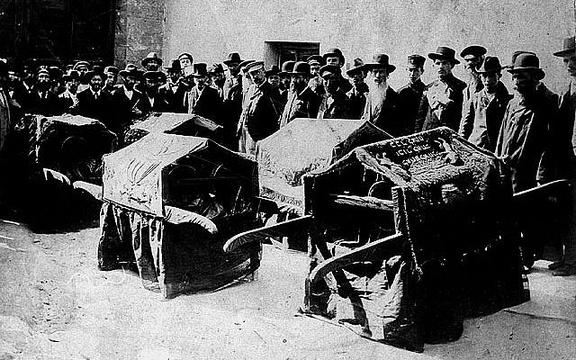
The rabbis and local Jewish leaders prepared ten urns and transferred the defiled Torah scroll segments inside. They then laid the urns in pairs on five specially designated stretchers which were upholstered in black fabric, with gold- and silk-embroidered covers depicting the ten commandments.
At 10 am, the funeral procession started walking away from the synagogue. Younger Jewish men formed a human chain on both sides of the street, all the way up to the [Jewish] cemetery, for about two miles. Local yeshiva students carried the stretchers with the urns. Approximately twenty thousand Jews marched behind them in reverent silence. Yet, once the procession approached the burial place, the mass of mourners burst into loud weeping and moans. […]
By 2 pm that afternoon, most attendees headed back home.
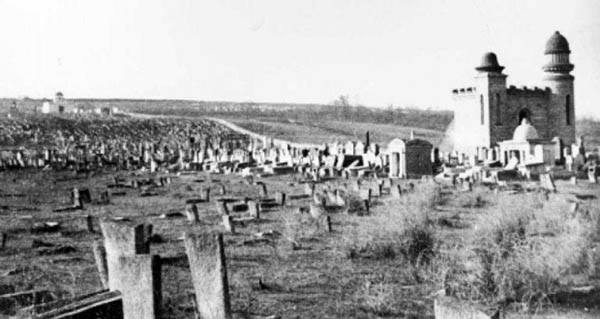
A tomb was built at the Jewish cemetery next to the resting place of the pogrom victims. The urns with religious relics were placed inside while the tomb entrance was covered with earth.
Long before Easter, we heard rumors of some serious anti-Jewish riots being planned in Chișinău during the holidays. On the first day of Easter, […] after lunch, around 4 o’clock, I began to notice some packs of cocky boys loitering on the street where I lived (Izmailskaia). […] It was not long before I heard my office window glass breaking – someone threw a potato at it. On Monday morning [day two], the situation changed dramatically.
[…] I no longer saw potato-wielding youths but grown men armed with heavy clubs and stakes out on the streets.
My neighbors told me that the (New) Market had been completely destroyed, shops all looted. […] Yet no police or military or even coachmen patrolled the streets. No one was stopping or hindering or holding back the newly arriving thugs. […] My family and I had expected that at any moment they would burst into our apartment, but the storm had luckily passed by without damage, my house intact.”
When the pogrom began, the crowds were closing in from two opposite directions at the corner of Kupecheskaia and Kievskaia streets. A detachment of infantry passed by, without any stops or hesitation. I felt puzzled and could hardly believe my eyes. I approached their officer who stood by […] like a casual observer and asked him: ‘What does this all mean?’ I got in return: ‘No orders have been issued to intervene.’
After the horrors I witnessed and after my nervous system calmed somewhat, I have been naturally ruminating: What made the violence of April 6th and 7th possible? I have lived almost my entire life in this city. I studied at the local gymnasium. I have spent 26 years of my medical career here. As a doctor and hospital administrator, as well as a permanent member of the local medical society, where I served as a secretary and have recently been elected to vice-presidency, I regularly come into contact with patients of various classes and origins. Sadly, I admit that relations between the Christian and Jewish populations have continued to worsen in the last few years, in my opinion, without any cause or reason. I am convinced that the local newspaper Bessarabets played a major role in stirring up troubles. It was full of systematic verbal assaults and mockery. It depicted Jews in an extremely subjective light by constantly citing various press releases, letters, or excerpts from other print sources. Reporting and commentary had been one-sided, partial, and unfavorable for the Jews. Inevitably, combined, these actions generated anti-Jewish sentiments in all strata of society.
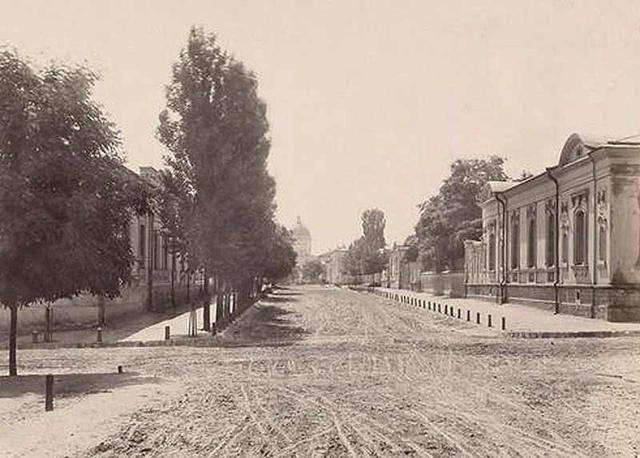
The anti-Jewish pogrom in Chișinău in April 1903 had profoundly affected the former mayor Karl Schmidt, prompting him to resign. He contributed so much to the Europeanization of the city yet he could not accept that the locals possessed such a capacity for violence. That is how he explained the reason behind his resignation. A sensitive and cultured man, he seemed incompatible with the Black Hundreds extremists who dictated the political fashion of the day. Leaving the office was his only option...
I was a guest at Pantelimon Sinadino’s house that Easter afternoon. Around 5 or 6 pm, a gang of youths dressed like some sort of working men or craftsmen strolled past the windows of Sinadino’s house. One of them used a stick to break the glass.
I interpreted this act as the start of violence. For several days beforehand there were persistent rumors about the brewing trouble. I then left my host and returned home to defend myself if the crowds turned against me. [...] Once back, I saw a group of observers around Grossman’s house whose eyes seemed to catalog the finale of the Jewish shops’ destruction. I was informed that one of the vandals had grabbed a stone and intended to throw it at the window of my house but a passerby redirected him: ‘Don’t you go throw it here where the mayor lives! Aim elsewhere,’ pointing toward Grossman’s house.
In the Fourth precinct, I witnessed a guy with his two younger pals attempting to break the door of a corner shop, armed with heavy boulders. A crowd of approximately thirty onlookers (ladies and men smoking ciragettes) casually observed their actions.
A short distance away, I noticed a police patrol and three lower-rank mounted dragoons. I immediately approached them, described what was happening, and asked them to intervene and stop the three perpetrators. Their response was short: ‘We have been released from duty.’
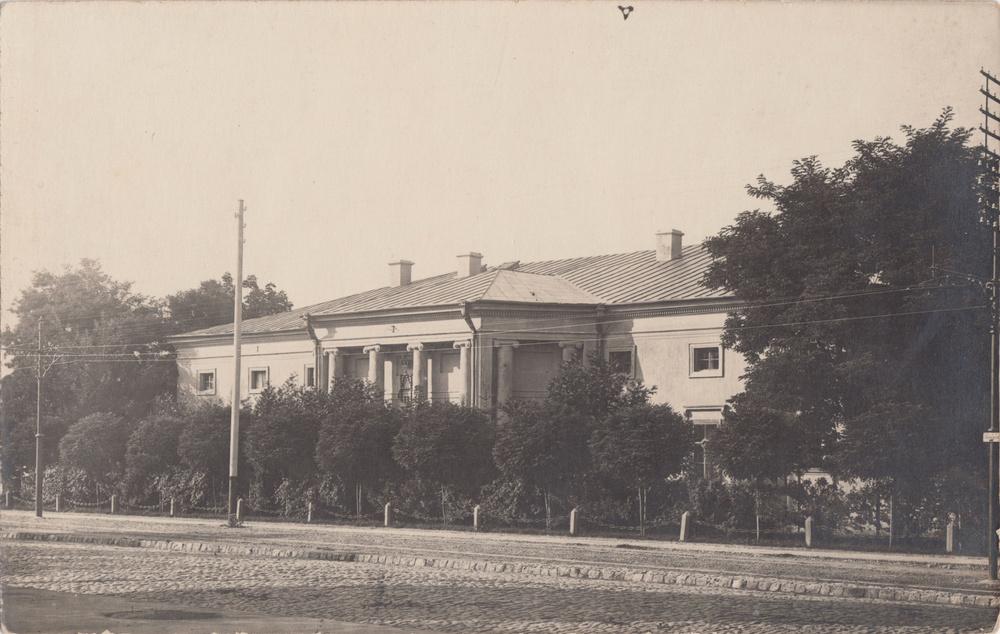
There was no government house for the Governor in the city. He rented, for six thousand rubles a year, a very attractive mansion of about fifteen rooms, occupied by Emperor Alexander II during the Turkish War. The house had attached to it a good-sized garden and an annex used by the provincial bureau.
We first went to that portion of Chișinău which had suffered most from the riots. Their effect was still quite evident.
[…] I soon understood that the main effects of the pogrom were not in the external injuries, but in the undermining of the daily work, in the stagnation of commerce and industry, and particularly in the mental attitude that maintained division and enmity among the population. The re-establishment of friendly relations was prevented as much by a feeling of sorrow and injury, and perhaps also a desire for revenge on the part of the Jews, as by the feeling of resentment on the part of many Christians. This feeling of resentment could be expressed approximately as follows: ‘On account of these Jews we must now bear the responsibility for the crime.
The majority of the local Christian population took no part in the pogrom, and they deplored its occurrence. Yet by no means all of them can honestly say that they did not at some time and in some way contribute towards maintaining the racial antagonism between the two portions of the Chișinău population.
There came to me, on the third day after my arrival, a deputation of twelve persons representing the local Jemsh community. […] My statement [to them] was almost literally as follows: “Gentlemen, I do not regard you as representatives of any particular class or social unit, of any particular society or institution. To me you are a portion of the Russian subjects living in Chișinău, united among yourselves by a common religion… […] You have not the right to expect religious intolerance, racial hatred, and biassed views from the highest representative of government authority in the province. […] I am personally averse to racial and religious antagonism.
I must say that in examining […] the secret papers of the Chișinău case in the Central Police Bureau […], I found not a thing to justify the assumption that the Ministry of the Interior thought it expedient to permit a Jewish massacre or even an anti-Jewish demonstration in Chișinău. […]
It cannot be denied that in the provinces included in the Jewish Pale of Settlement it is especially the Jews who were the victims of plunder and violence. The main cause of this is the special legislation favoring the view that the Jews are subjects beyond the law's full protection — an element dangerous to the state.
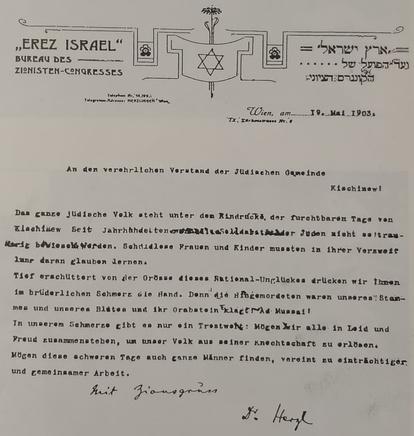
May 19, 1903
All Jews have felt the emotional toll of those horrifying days in Chișinău. Our solidarity has been tested like never before. Innocent women and children have suffered and learned that Jews are in danger. Deeply moved by the magnitude of this national disaster, we extend our hand to you to express our deep grief. For those murdered had been our kin and blood, and their tombstones lament: Ad Mussai! (How long, O Lord?)
In our pain there is only one message of comfort: May we all unite, in sorrow and in joy, to liberate our people from bondage. May these difficult days also give us true men to join our cause of peace and oneness.